Fit Over Fame: How to Choose a Branding Agency for SaaS and B2B

Muhammad Umer
Author
Anyone can make a logo now. AI can sketch a dozen in minutes. The hard part of branding has moved. It’s deciding what your company stands for, then carrying that idea into everything a buyer sees.
That changes what a good branding partner looks like. Fame and price matter less than fit: the right partner fills the gap your business has right now.
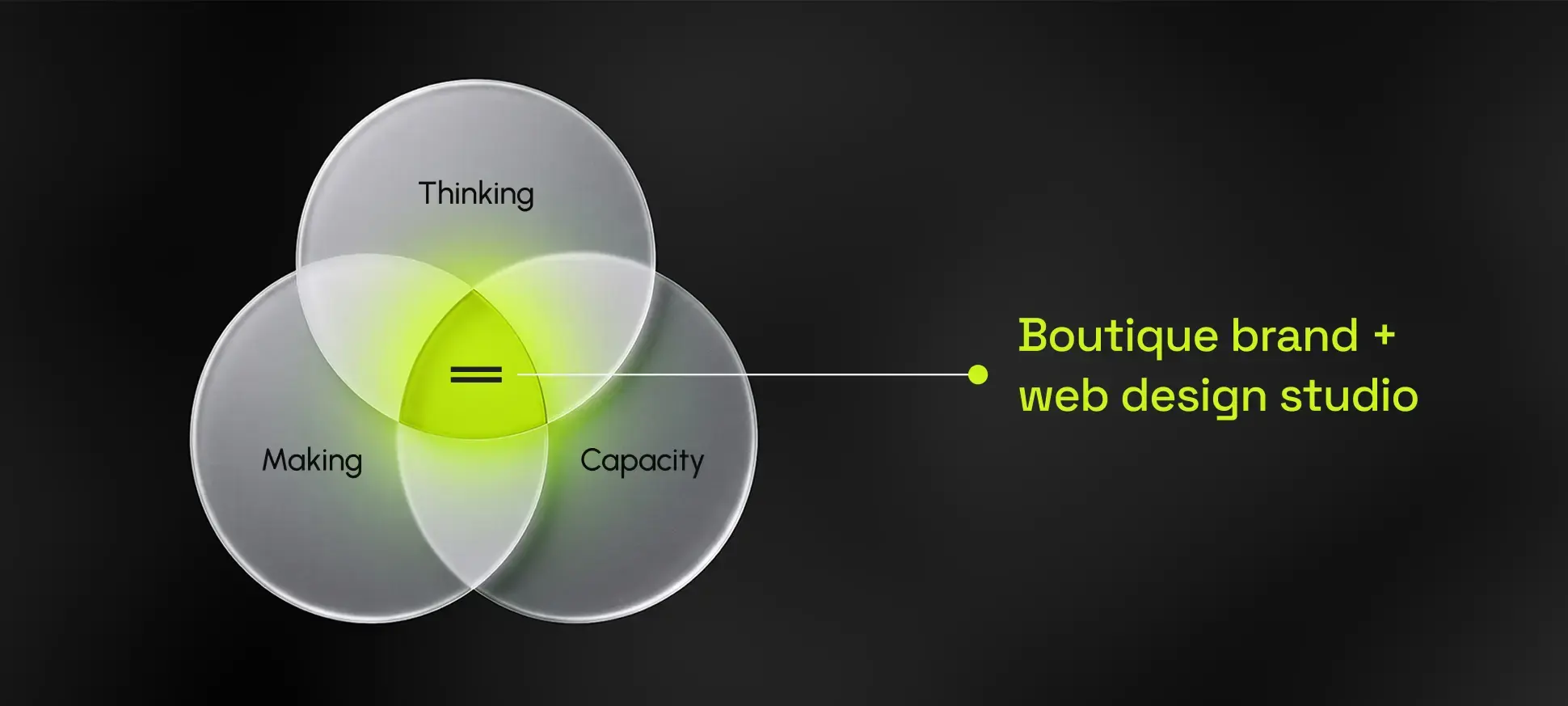
The short answer: Choose a branding partner by the gap you need filled. Can’t explain why you’re different? You need thinkers. Know who you are, but it doesn’t show? You need makers. Brand is solid, but you can’t keep up? You need capacity. Growth-stage SaaS, AI and B2B companies usually need all three.
AI made logos cheap. It made clear thinking priceless.
Branding Got Easier to Make and Harder to Get Right
AI in branding has cut the early stages from weeks to an afternoon. Names, mood boards and logo concepts are now cheap to produce. What’s gotten harder is choosing the right one and keeping it consistent, because AI is good at generating options and poor at judging which one fits your market.
Speed also brings sameness. When everyone uses the same tools and similar prompts, brands start to blur together. AI drifts too, reinterpreting your brand a little with every new asset.
So judge a branding partner on three things:
- Judgment: picking the right idea out of fifty, and being able to explain why.
- Systems: guidelines and templates that keep every asset consistent, whoever or whatever makes it.
- Connection: tying the brand to where it earns money, especially your website. A good-looking website that doesn’t convert is usually a brand problem first.
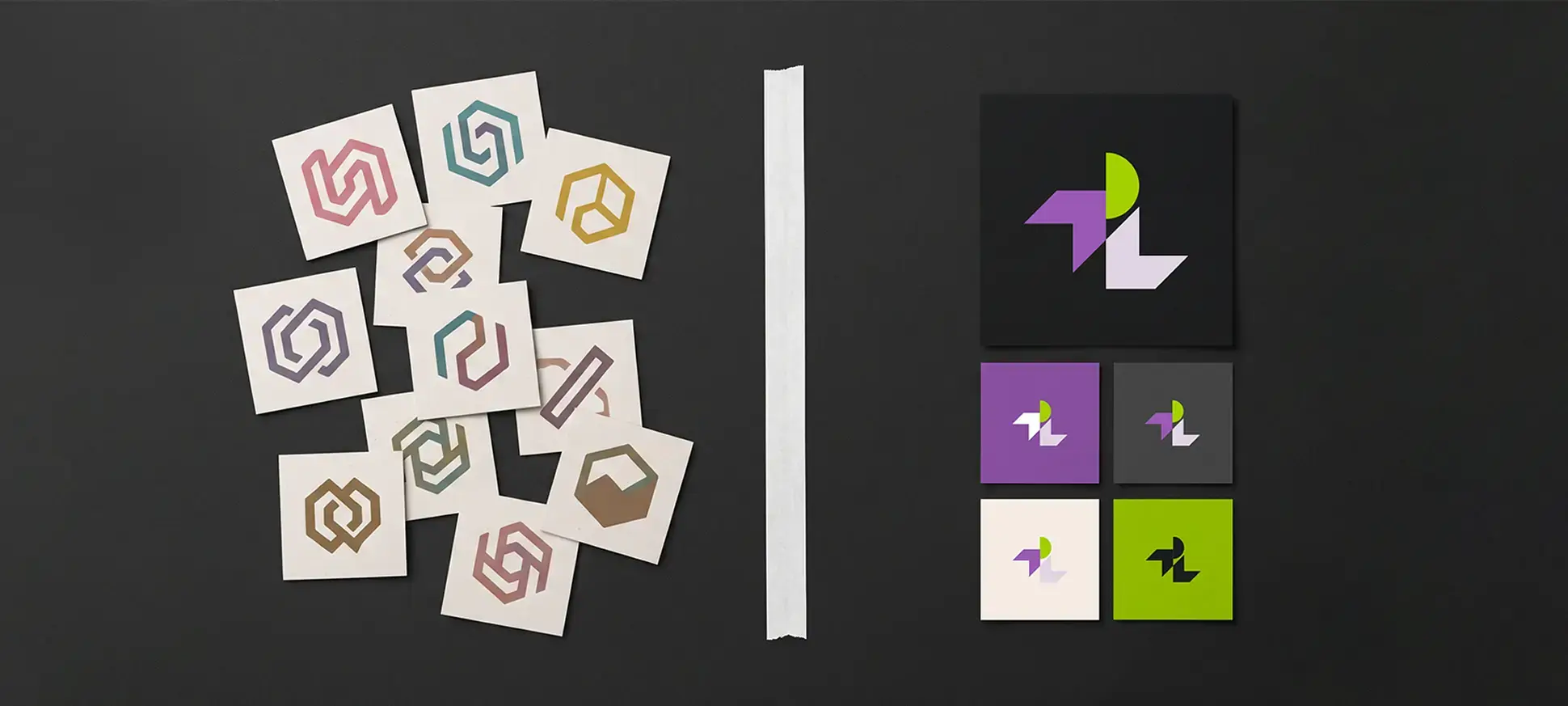
We saw the judgment part clearly with The Pitch Labs, a lead generation and automation company. The founder is a lifelong cricket fan. “Pitch” comes from the cricket pitch, and “Labs” is where the real work happens. AI could have produced a hundred logos in an hour. The real job was deciding how one mark could carry both sides, the sport and the automation work, and still read clearly to a buyer. We set the positioning first, then built the identity and the website around it.
How to Choose a Branding Agency: Start With the Gap
To choose a branding agency for SaaS or B2B, name the gap you need filled before you look at a single portfolio. Most companies have one of three: thinking, making or capacity. Each one points to a different kind of partner, so the gap decides your shortlist.
| Your gap | What it sounds like | What you need |
|---|---|---|
| Thinking | “We can’t explain why we’re different.” | Positioning, messaging, strategy |
| Making | “We know who we are, but it doesn’t show.” | Identity, copy, website |
| Capacity | “Our brand is solid, but we can’t produce enough.” | Ongoing design and content |
Then factor in your stage and your real cost. Cheaper options usually cost more of your own time in briefing, reviewing and stitching work together.
Not sure which gap is yours? Book a discovery call and we’ll help you work out which kind of partner fits.
13 Types of Branding Partners, Explained
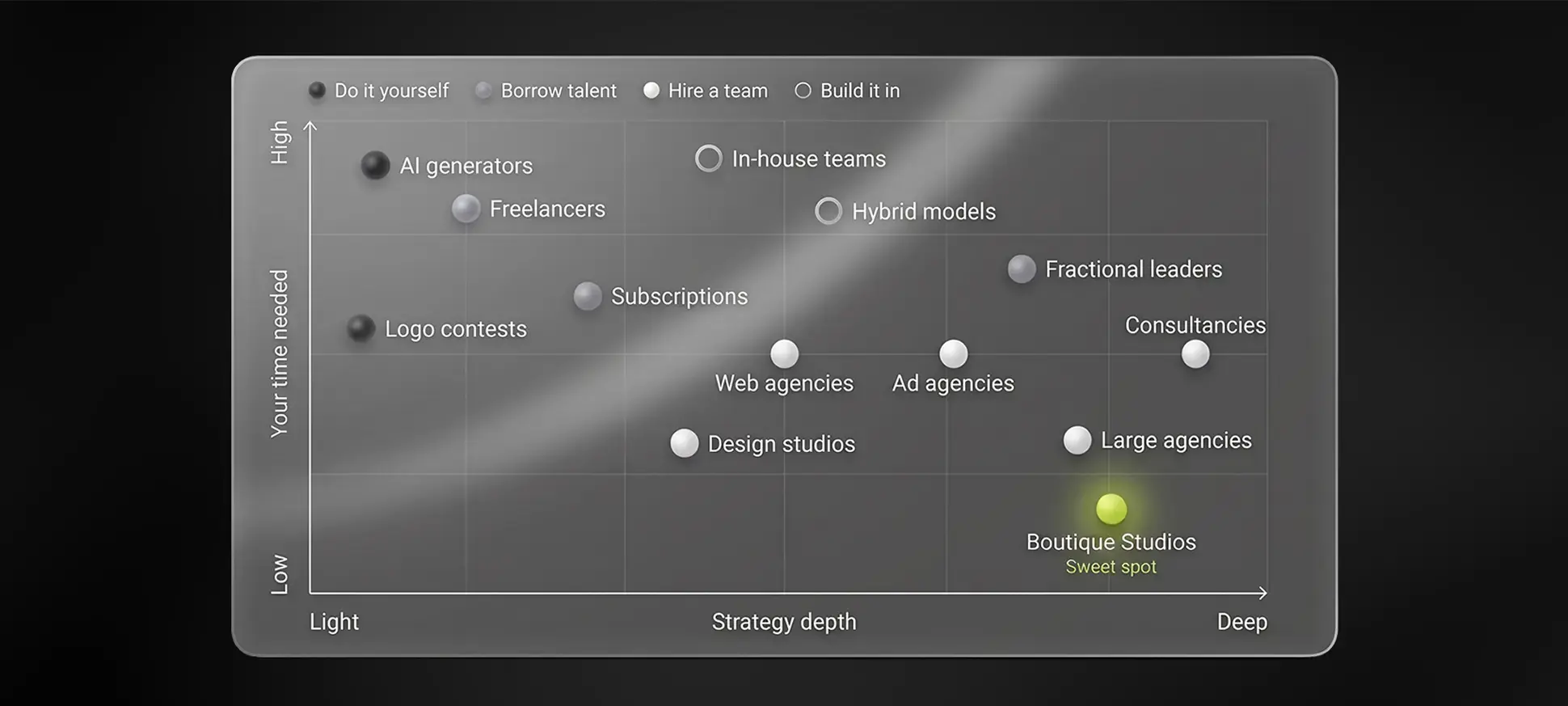
There are 13 common types of branding partner, from AI generators to full in-house teams. They fall into four families: do it yourself, borrow talent, hire a team or build it in. Each family trades cost against strategy, consistency and how much of your own time it takes.
Do It Yourself
- AI brand generators: instant names, logos and palettes. Good for exploring. Weak on originality and consistency.
- Logo contests and marketplaces: many designers, one winner. Cheap, with no strategy behind it.
Borrow Talent
- Freelancers: single specialists per project. Flexible, but you become the project manager.
- Fractional brand strategists: a part-time senior strategist or creative director. Senior judgment without a full-time hire, though someone else still makes the work.
- Creative subscriptions: a monthly fee for an ongoing design queue. Built for volume rather than for defining a brand.
Hire a Team
- Brand consultancies: deep strategy, naming and positioning. Execution usually happens elsewhere.
- Identity design shops: strong visual identity. Usually no strategy, copy or website.
- Boutique brand and web studios (often called boutique branding agencies): strategy, identity, messaging and website design and development under one roof. Limited capacity, so good ones book up.
- Web and digital agencies: build websites and apps well, but rarely question the brand itself.
- Creative and ad agencies: campaigns, video and launches for brands that already have their foundations.
- Large full-service agencies: every discipline at scale. High fees and slower decisions.
Build It In
- In-house teams: deep brand knowledge and steady output, but it’s hard to stay objective.
- Hybrid models: an in-house core plus outside specialists. Works well with one clear owner.
| Partner type | Gap it fills | Strategy | Website |
|---|---|---|---|
| AI generators | Making (starter) | No | No |
| Logo contests | Making (logo) | No | No |
| Freelancers | Making | Rarely | Sometimes |
| Fractional strategists | Thinking | Yes | No |
| Creative subscriptions | Capacity | Light | Sometimes |
| Brand consultancies | Thinking | Deep | No |
| Identity design shops | Making (visual) | Light | Rarely |
| Boutique studios | All three (with a retainer) | Yes | Yes |
| Web agencies | Making (build) | Light | Yes |
| Creative and ad agencies | Campaigns | Campaign-level | Sometimes |
| Large agencies | All three | Yes | Yes |
| In-house teams | Capacity | Varies | Varies |
| Hybrid models | What’s missing | Varies | Varies |
Five Questions to Ask Before You Sign
Before you sign with any branding partner, ask five questions. They cover how the partner uses AI, who leads the work, what you own at the end, whether you get a system or a folder of files, and how success gets measured. The answers will tell you more than the portfolio does.
- Where do you use AI, and where do people decide? Strategy and final calls should stay human.
- Who leads the work day to day? You want the senior person accountable from kickoff to launch, not just whoever pitched.
- What do we own at the end? Source files, licenses and usage rights.
- Do we get a system or a folder of files? Guidelines and templates keep the brand consistent after handover.
- How will we measure success? Conversion, sales cycle, win rate or pricing power.
A brand is finished when buyers can describe you without you in the room.
Why Offside Creative Works the Boutique Way
Offside Creative is a boutique brand and web studio in Northern Virginia, working with SaaS, AI and B2B companies across the US. Growth-stage companies in that space usually have all three gaps open at once. We close them in order, with one senior lead: strategy first, then identity, then a conversion-focused website built on the same story.
Purk shows why the order matters. The founder came to us with an app they’d built themselves. We restructured the whole app into a clear framework first, then built the brand, then designed the app’s UI/UX and implemented it, along with the website. Structure came before style, so the brand and the interface were designed around how the product actually works.
That’s what most founders are looking for when they search for a B2B branding agency: one partner who can think, make and keep going after launch. We use AI where it makes us faster and keep every final decision in human hands.
- Brand strategy and positioning
- Brand identity design
- Website design and development
- SEO and GEO: visibility on Google and inside AI answers
- Growth partnership: optimization and support after launch
Frequently Asked Questions
Not fully. AI is excellent for generating options and speeding up production, but it can’t judge which idea fits your market, and it struggles with consistency. The best results are AI-assisted and human-led.
A brand consultancy focuses on strategy: research, positioning and naming. A branding agency turns that strategy into identity, messaging and websites. Boutique studios often do both.
Usually, yes. One team keeps messaging, visuals and user experience aligned, so the website sells with the same story the brand tells.
It depends on the model and the scope. AI tools and contests sit at the low end, freelancers and identity shops in the middle, and large agencies at the top. The better question is what it costs to rebuild a brand that didn’t fit.